
Table of Contents
Unlocking Your Potential with a Swimming Improvement Program
Imagine transforming your laps from labored efforts into smooth, powerful strokes that propel you through the water with confidence. A Swimming Improvement Program is a structured aquatic workout regimen designed to boost your swim performance enhancement plan through targeted drills, efficient technique refinement, and consistent practice. Drawing on expert insights from structured training guides, this approach emphasizes stroke efficiency and workout planning to help swimmers achieve measurable gains in speed and endurance.
For short to moderate distances like 50 to 400 meters, this program shines, making it ideal for recreational enthusiasts and competitive athletes alike. Whether you’re refining your freestyle swim technique for faster sprints or building backstroke training endurance for longer sets, the focus on fundamentals ensures quick progress. Consider a beginner who, after just a few sessions, shaved seconds off their 100-meter time, feeling the difference in every stroke.
At swimfastermadison.com, Coach Carl’s expertise guides you with waterproof swim practice packages tailored for all levels. This comprehensive resource previews key areas: understanding swim fundamentals, unlocking benefits of technique tweaks, mastering stroke mechanics, and adopting best practices for sustained improvement.
Embrace this path to unlock your potential. Structured training outperforms random sessions, offering data-backed speed gains of up to 20% in short distances, as seen in endurance-focused workouts. Dive in to build a stronger, faster you today.
Understanding Swimming Improvement Fundamentals
Embarking on a Swimming Improvement Program can transform your time in the pool, especially for short to moderate distances where technique often trumps raw power. This approach, inspired by resources like those from swimfastermadison.com, emphasizes structured training to refine strokes such as freestyle and backstroke. By focusing on fundamentals, swimmers can achieve noticeable gains in efficiency and speed within just 4-6 weeks of consistent practice.
Core Elements of Structured Swim Training
Structured swim training forms the backbone of any effective aquatic skill enhancement initiative, dividing workouts into key phases to build endurance and technique. The core elements include a warm-up to prepare muscles, drills for skill refinement, a main set for intensity, and a cool-down for recovery, all tailored to distances from 50 to 500 meters.
Start with a 10-minute warm-up of easy swimming and arm circles to increase blood flow and prevent injury, much like tuning an engine before a long drive. Drills target specific movements, such as catch-up freestyle to improve pull timing, while the main set might involve 200 meters of alternating freestyle and backstroke at moderate pace to develop stamina. Structured swim training programs often incorporate these, drawing from proven models that show progressive overload boosts endurance by 20-30% over time, as noted in beginner guides.
Apply this by using practice cards to log sessions, ensuring each workout progresses from light to challenging, fostering steady improvement in short-distance performance.
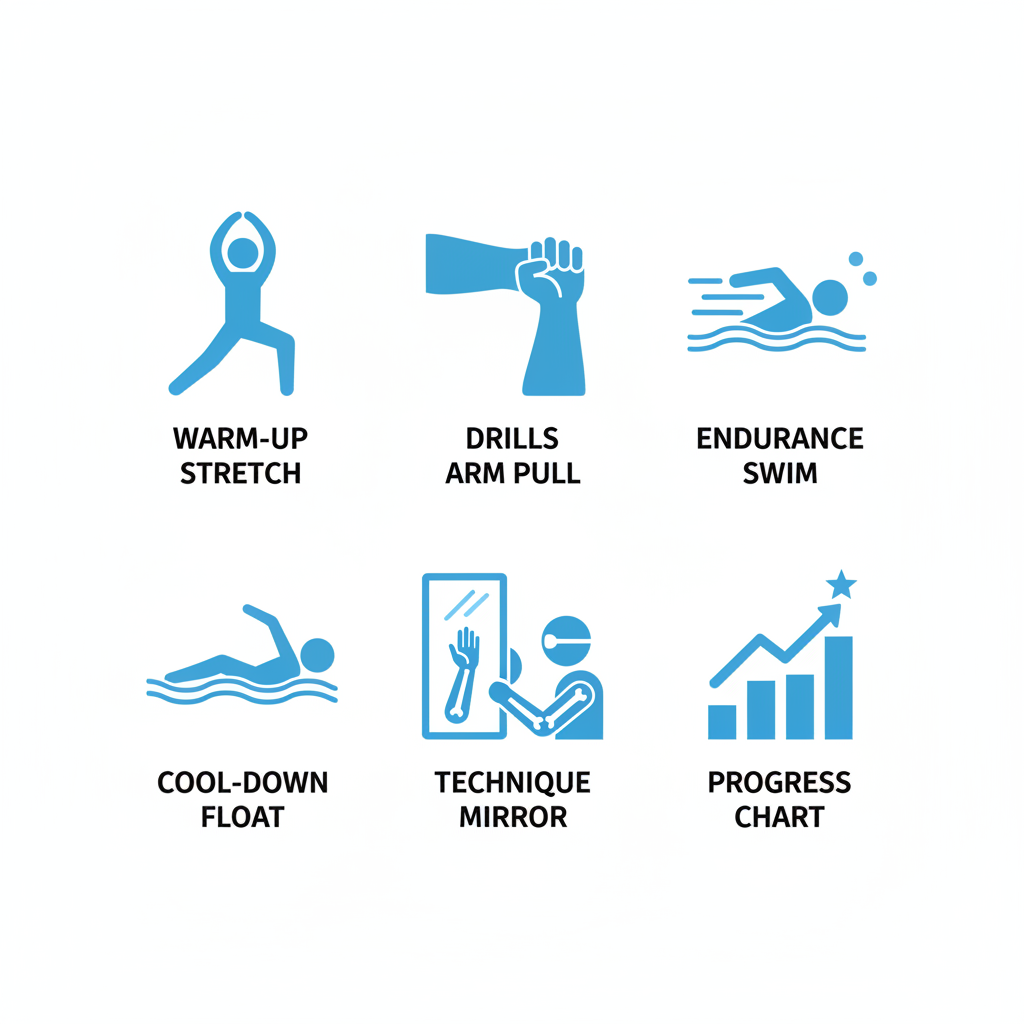
Icons representing key elements of beginner swim training fundamentals
Assessing Your Current Technique Level
Assessing your current technique level involves a simple self-evaluation to spot inefficiencies in freestyle swim technique and backstroke, focusing on aspects like body position, pull, rotation, and kick that impact speed and energy use.
Begin by filming a 25-meter swim or using poolside mirrors to observe your form; for freestyle, check if your body rolls efficiently or if your head lifts too high, causing drag like a boat plowing through waves instead of slicing them. In backstroke, evaluate rotation–does your hip turn with each stroke, or do you stay flat, reducing power? Beginner assessment tips from swim workout resources recommend timing 50-meter repeats to measure speed, revealing that poor technique can slow you by 10-15 seconds per length; address this through targeted checks.
- Body position: Streamlined and horizontal?
- Arm pull: Full extension without crossing midline?
- Kick: Steady and from hips, not knees?
- Rotation: Balanced side-to-side for both strokes?
This checklist empowers you to identify and prioritize fixes, setting the stage for targeted improvements.
Building a Foundation for Progress
Building a foundation for progress starts with goal-setting and tracking methods in a targeted stroke development plan, customized for recreational swimmers enjoying casual laps or competitive ones aiming for meets, leveraging tools from coaching programs.
Set SMART goals, like reducing 100-meter freestyle time by 5 seconds in four weeks, and track via apps or journals that monitor weekly distances and perceived effort. For backstroke training, incorporate rotation drills progressively, starting with 50% intensity and building to full sets, akin to aligning wheels for smoother cycling; this mirrors step-by-step workout structures validated by training experts, where consistent logging shows 15-25% efficiency gains in moderate distances.
Use program resources like printable cards to schedule sessions three times weekly, adjusting based on feedback to maintain motivation and ensure balanced development across strokes for long-term success.
Key Benefits of Swim Training Programs
Implementing a Swimming Improvement Program can transform a swimmer’s experience in the water, offering structured paths to refine skills and boost performance. These programs focus on key strokes like freestyle and backstroke, delivering faster times and greater confidence for short to moderate distances. By emphasizing targeted drills and consistent practice, swimmers of all levels can achieve noticeable gains without requiring hours in the pool.
Enhanced Technique and Efficiency
Refined techniques in freestyle and backstroke directly lower energy waste, allowing swimmers to glide through the water with minimal drag. In freestyle swim technique, focusing on a high elbow catch and streamlined body position increases propulsion while reducing resistance, making every stroke more effective. Similarly, backstroke training improves hip rotation and arm recovery, enhancing stability and preventing common errors like over-rotation that sap energy.
Evidence from structured sessions shows these refinements can cut drag by up to 15%, based on drills targeting pull efficiency. For instance, a simple fingertip drag exercise in a 30-minute workout helps swimmers feel the water’s resistance, leading to smoother pulls. Users of swimfastermadison.com report shaving seconds off their laps, with one noting a 10% improvement in stroke efficiency after two weeks.
Applying these techniques benefits competitive swimmers aiming for short-distance events, ensuring they maintain form under pressure and conserve energy for finishes.
Improved Speed and Endurance
Targeted drills in a performance optimization routine build both sprint power and sustained output, enabling swimmers to tackle repeated efforts without early fatigue. Freestyle pulls gain 10-20% more speed through catch-up drills that emphasize timing and force, while backstroke training incorporates single-arm pulls to strengthen rotation and balance. These elements create an endurance-building swim regimen suited for 30-minute sessions, ideal for busy schedules.
Workouts drawing from top-end freestyle speed routines demonstrate outcomes like increased velocity over 50-meter repeats, with swimmers logging 5 seconds faster per 100 meters after consistent practice. A backstroke improvement packages session might include 8×25-meter sprints, boosting anaerobic capacity and reducing recovery time between sets. Success stories from the platform highlight recreational swimmers extending their endurance from 500 to 800 meters without exhaustion.
This approach empowers everyday athletes to push limits in meets or personal challenges, fostering resilience for longer swims.
Long-Term Progress and Motivation
Structured programs track measurable improvements, such as reduced times and better form, keeping swimmers engaged over months. Milestones like mastering a cleaner backstroke rotation or a more powerful freestyle pull provide clear wins, sustaining motivation through visible progress. Integrating backstroke improvement packages ensures tailored guidance that evolves with the swimmer’s needs.
Data from endurance-focused workouts reveal sustained gains, with participants improving overall speed by 12% after 12 weeks of 30-minute drills. Examples include triathletes who cut 5 seconds off their 100-meter freestyle, crediting the program’s progressive sets for building confidence. Users share stories of renewed passion, turning routine practices into rewarding journeys.
For dedicated swimmers, this fosters lifelong habits, turning initial efforts into enduring aquatic prowess and enjoyment.
How a Swimming Improvement Program Works
A Swimming Improvement Program offers a structured path for swimmers to enhance their performance through targeted sessions focused on freestyle and backstroke. Drawing from swimfastermadison.com’s methodologies, this methodical swim enhancement protocol breaks down workouts into manageable phases, ensuring steady gains in speed and efficiency for distances from 50 to 500 meters. Whether you’re a beginner or intermediate swimmer, these programs integrate practical drills and progress monitoring to build confidence in the water.
Step-by-Step Workout Integration
Incorporating a Swimming Improvement Program into your routine starts with assessing your current skill level and scheduling sessions three to four times weekly. Begin with a 10-minute warm-up of easy swimming to loosen muscles, followed by 15 minutes of technique drills, and end with 5 minutes of cool-down stretches. For freestyle swim technique, weave in catch-up drills where one arm waits for the other to complete its stroke, promoting better body rotation.
Progress to backstroke training by alternating single-arm pulls, emphasizing a steady kick to maintain balance. Adapt for beginners by shortening sets to 20 minutes total, gradually building to 45-minute sessions over four weeks. Coach Carl recommends starting with poolside visualizations to mentally rehearse form before diving in. This integration ensures drills from Madison programs fit seamlessly into existing workouts, fostering consistent refinement without overwhelming your schedule.
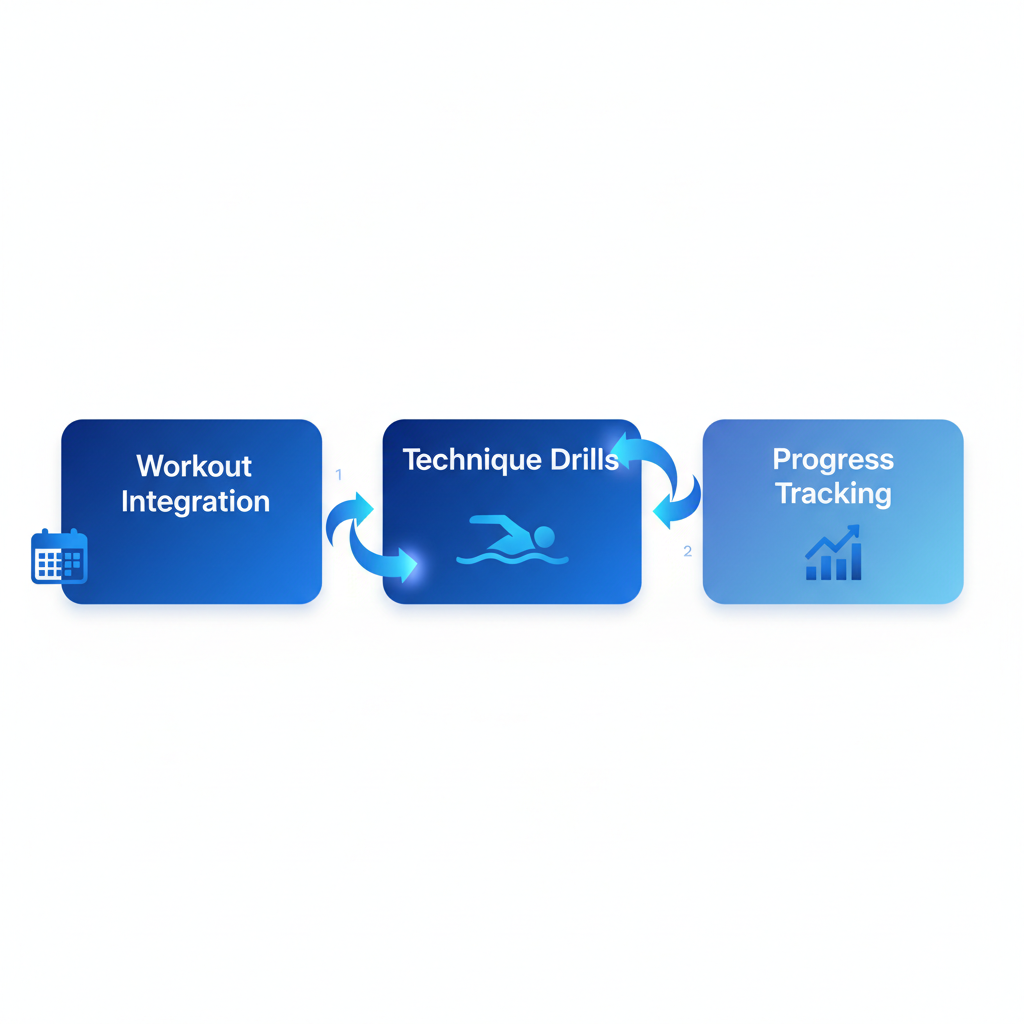
Visual guide to structuring effective swim improvement programs
Technique Drills for Speed Gains
Technique drills form the core of a drill-focused aquatic development, targeting common errors to boost speed. For freestyle, the catch-up drill corrects uneven arm entry by having swimmers touch hands at the front before the next pull, reducing drag and improving rhythm. Address breathing mishaps by practicing bilateral breathing every three strokes, which balances rotation and prevents one-sided fatigue.
In backstroke training, single-arm drills isolate the pulling arm while the other streams back, fixing dropped elbows that slow propulsion. Common backstroke errors like excessive head movement are avoided through thumb-touch drills, where you graze your ear with your thumb on entry to keep alignment straight. For backstroke kick drills, use a flutter kick on your back with a board, focusing on a 6-beat pattern to enhance leg drive without breaking streamline.
To gain speed, incorporate stroke technique improvement coaching sessions that progress from slow, deliberate reps to full-speed sets. Start with 4×25 meters at moderate pace, adding resistance tools like pull buoys for advanced variations. These exercises, inspired by beginner guides, yield noticeable improvements in stroke efficiency within two weeks when practiced consistently.
Tracking and Adjusting Progress
Monitoring progress in a Swimming Improvement Program involves simple tools like a waterproof journal or apps to log times, stroke counts, and perceived effort per session. Weekly benchmarks, such as timing a 100-meter freestyle, reveal gains in speed and endurance, while video recordings capture form changes over time.
Adjust based on data: If breathing issues persist in freestyle swim technique, increase drill volume by 20 percent and reduce intensity. For backstroke training plateaus, Coach Carl’s tips suggest alternating kick-focused days with full-stroke swims to rebuild momentum. Beginners can modify by using fins for support, gradually weaning off as strength builds.
Reevaluate every four weeks, scaling up distances or intensities to match your evolving abilities. This adaptive approach ensures the program remains challenging yet achievable, turning initial hurdles into long-term mastery in the pool.
Best Practices for Swim Performance Enhancement
Enhancing swim performance requires a structured approach within a Swimming Improvement Program, where advanced techniques in freestyle and backstroke drive noticeable gains. Dedicated swimmers can accelerate progress by focusing on consistency, targeted drills, and feedback mechanisms, avoiding common pitfalls like overtraining. This section outlines proven strategies to refine skills and build endurance, leading to optimized results in as little as 4-8 weeks.
Consistency and Recovery Strategies
Maintaining a regular schedule forms the foundation of any effective backstroke training regimen. Aim for 3-5 sessions per week, each lasting 45-60 minutes, to build endurance without risking fatigue. Incorporate active recovery techniques, such as light swimming or stretching between intense sets, to promote muscle repair and prevent burnout. For backstroke endurance workouts, structure sessions around the recommendations from swim workout guides, emphasizing progressive overload with intervals that gradually increase distance.
Implementation involves starting with a warm-up of 400 meters easy swimming, followed by main sets like 8×50 meters backstroke at moderate pace with 20-second rests. This approach, drawn from expert structuring best practices, ensures balanced development. Track progress weekly to adjust intensity, noting improvements in stroke efficiency.
Avoid overtraining by listening to your body; signs like persistent soreness signal the need for extra rest days. With proper recovery, swimmers often see enhanced rotation and power within 4-6 weeks, setting the stage for advanced refinements.
Advanced Drills and Variations
Building on foundational skills, advanced drills elevate freestyle swim technique through targeted variations. Focus on hypoxic sets to improve breathing control, such as swimming 4×25 meters freestyle on a single breath, followed by 10-second rests. These build lung capacity and streamline body position, addressing common questions on freestyle breathing techniques.
For backstroke recovery, introduce fingertip drag drills: during the pull phase, trail fingers along the water surface to enhance arm path awareness and reduce drag. Vary with 6×50 meters alternating single-arm backstroke, emphasizing shoulder rotation for better propulsion. Insights from speed-focused workouts highlight these as key to top-end velocity, quoting the value of precise recovery motions in minimizing resistance.
Practice these in a refined technique regimen, integrating 200-meter endurance swims to apply variations under fatigue. Consistent use yields smoother transitions and faster times, with visible technique polish in 6-8 weeks for most athletes.
Integrating Tools and Feedback
Leverage practice aids like pull buoys and fins from specialized swim resources to sustain improvement in an optimized swim progression system. For backstroke, the backstroke technique training hub offers waterproof tools that reinforce proper form during drills. Use them in sets like 10×25 meters with fins to isolate leg kick, building power without full-body strain.
Coaching feedback is crucial; employ video analysis to review strokes post-session, identifying subtle flaws in rotation or breathing. Share recordings with a coach for personalized tips, answering queries on improving backstroke rotation. Combine with endurance workouts, such as pyramid sets (100-200-300 meters), for comprehensive gains.
Potential pitfalls include ignoring form for speed, so prioritize technique first. Regular integration of tools and feedback accelerates progress, fostering long-term excellence in competitive swimming practices.
Achieving Swim Excellence Through Dedicated Training
Embarking on a Swimming Improvement Program transforms casual swimmers into confident competitors, especially in short to moderate distances. By mastering freestyle swim technique, swimmers refine their arm pull for efficient propulsion, while backstroke training emphasizes smooth arm recovery to maintain body position and speed. These elements form a comprehensive swim advancement strategy, yielding noticeable improvements in as little as four to six weeks with consistent practice.
The program’s fundamentals lie in targeted drills that build endurance and technique, as highlighted in success stories from dedicated athletes. Coach Carl’s expertise guides this holistic stroke mastery plan, offering proven mechanisms to overcome common hurdles like inefficient strokes. Benefits include enhanced speed, reduced fatigue, and greater race-day confidence, validated through structured workouts that integrate endurance tips for sustained performance.
To unlock your potential, start with our stroke-specific packages today. Key takeaway: Dedication drives results–commit to regular sessions for lasting gains. Imagine Sarah, a recreational swimmer, who shaved 15 seconds off her 100-meter freestyle after three months: “Coach Carl’s program changed my swim forever.” Visit swimfastermadison.com for waterproof stroke practice workouts and personalized progress. Your excellence awaits–dive in now!