
Table of Contents
Mastering Swim Workouts for Better Performance
Swim Workouts form the backbone of effective training for swimmers eager to boost their performance. From adults new to swim training in Madison to seasoned competitors, these structured swimming sessions offer a clear path to mastery, enhancing everything from endurance to precision in the water.
Organized sets of drills, intervals–brief, intense swims–and recovery periods define swim workouts. They deliver key benefits like refined stroke technique, increased speed, and injury prevention through consistent practice. Essential components include warm-ups to loosen muscles, main sets for targeted stroke-focused training routines, and cool-downs to aid recovery. Resources from experts like Swimming Wizard highlight how regular sessions can yield noticeable speed gains, making them accessible for beginners.
Discover practical swim workout plans tailored for all levels with Swim Faster Madison’s offerings, such as the Better Freestyle package. Our swim practice cards provide printable aids to track progress. Ahead, explore freestyle swim workouts and variations to elevate your routine.
1. Beginner-Friendly Swim Workout Basics
Starting swim workouts can feel daunting for newcomers, but simple structures ease those fears and build confidence quickly. Whether you’re an adult dipping your toes into the pool for the first time or seeking entry-level swimming routines, these basic aquatic exercises focus on fun and technique without overwhelming intensity. As recommended by Swimming Wizard resources, beginners thrive with paced sessions that prioritize safety and gradual progress.
A solid swim workout plan follows a clear structure: warm-up with arm circles and gentle 25m swims to loosen muscles; main set of 4x50m easy freestyle at a comfortable pace, emphasizing smooth strokes over speed–aim for easy effort cues like conversational breathing; cool-down with light stretches to aid recovery. This routine, validated by sample paces from Swimming Wizard (around 2:00 per 50m for novices), totals about 20-30 minutes and adapts easily from pool to home settings with minimal equipment.
For adult beginners, modify by using kickboards or waterproof swim packages for durable aids that enhance buoyancy. Start in shallow water to build comfort, then progress to deeper ends. These basics lay the foundation, evolving into technique-focused sessions like those in Better Freestyle for refined strokes.
2. Decoding Structured Swim Workouts
Structured swim workouts often confuse beginners with their cryptic notations, but understanding them unlocks organized swim sessions that boost efficiency and technique. For instance, Swim Workouts like those in notated training drills require decoding to perform accurately.
Key terms clarify execution: 4x100 on 2:00 means four 100-meter swims, each starting every two minutes, allowing rest based on your pace. Effort levels might specify moderate or hard, while stroke counts like 25 scull focus on technique in freestyle swim workouts. Recovery swims, such as 100 easy, promote active rest. Drawing from the MySwimPro blog’s S-tier freestyle drills, notations enhance sets by timing sculling or catch drills precisely, consistently improving form without overexertion.
To adapt, calculate intervals from your personal times, adding 10-20 seconds for rest. Complement with freestyle drill videos for visual cues, ensuring swim workout plans fit your level and aid custom progression.
3. Building Ideal Swim Workout Structures
Effective swim training starts with well-structured sessions that prioritize balance to enhance technique and speed. Swim Workouts should incorporate a 10-80-10 rule: 10% warm-up, 80% main set for intensity, and 10% cool-down for recovery. This approach, supported by studies like those in PMC articles, ensures optimal performance gains while minimizing injury risk.
- Warm-up (10%): Begin with 400-800 meters of easy swimming, including light drills to loosen muscles and focus on form.
- Main Set (80%): Dedicate the bulk to swim workout plans with varied drills for different strokes, such as freestyle pulls or backstroke kicks. Incorporate rest ratios of 1:10 (work to rest) for speed work and 1:20 for endurance building in balanced aquatic training.
- Cool-down (10%): End with 200-400 meters of gentle swimming to promote recovery, crucial for speed improvements as evidenced by research on active recovery’s benefits.
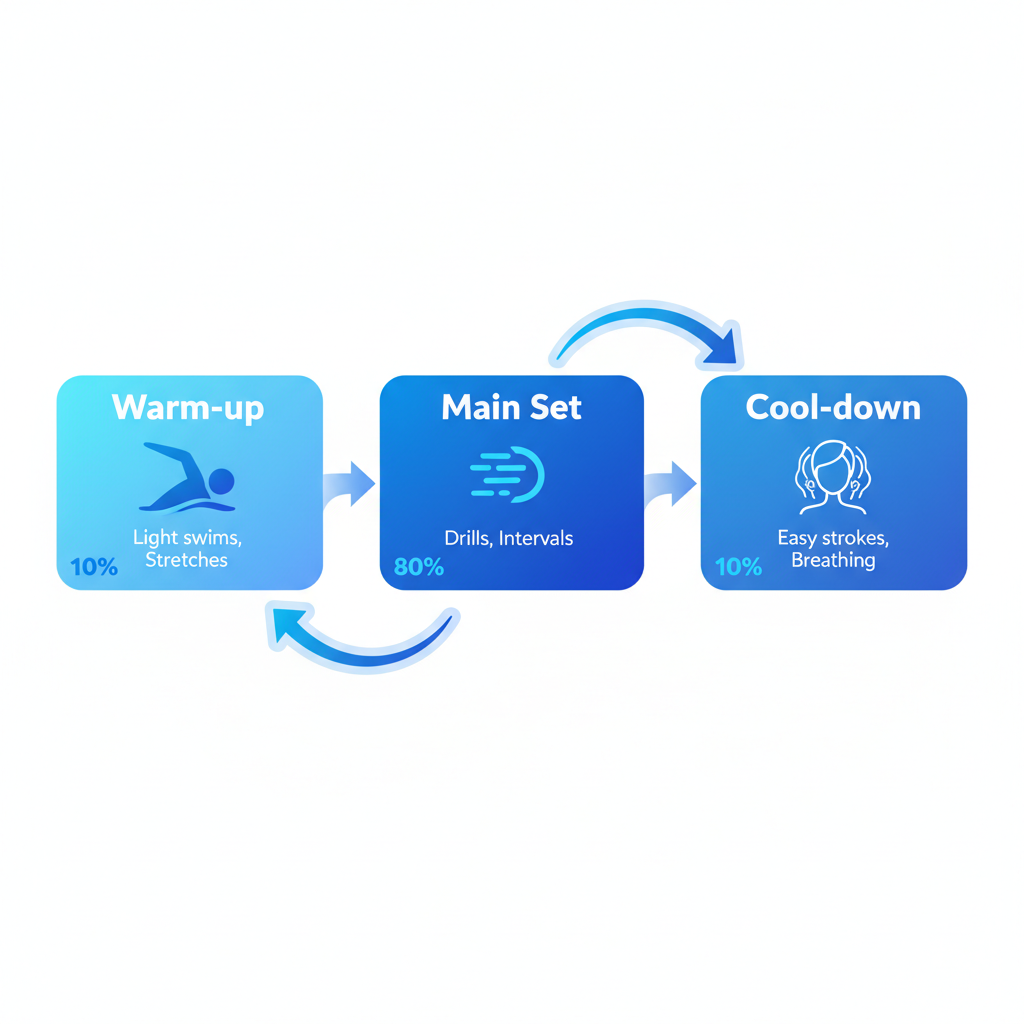
Visual guide to building structured swim workouts with key phases
4. Freestyle Workouts for Speed Gains
Freestyle swim workouts stand out for building explosive speed and lasting endurance in the water. These targeted sessions refine arm pull efficiency and body rotation, helping swimmers shave seconds off their times while preventing fatigue during longer swims. Ideal for competitive athletes, they address common technique flaws to unlock peak performance.
Start with the catch-up drill, an S-tier favorite from MySwimPro rankings that boosts timing and stroke rhythm by having one arm wait until the other completes its pull. Follow with 8x50m speed-focused swim sets: swim 25m fast, then 25m easy, resting 10 seconds to emphasize power without burnout. Integrate bilateral breathing patterns every three strokes to maintain symmetry and oxygen flow, especially vital for triathletes transitioning to open water. These freestyle training drills can yield up to 15% efficiency gains, as noted in expert analyses, by honing propulsion and reducing drag.
For seamless integration, incorporate reusable swim sets into your weekly swim workout plans, repeating the 8x50m progression over four sessions to track improvements. Film your strokes for self-review, as Coach Carl recommends, to spot rotation tweaks and adapt for endurance races.
5. Advanced Endurance Swim Plans
For competitive swimmers and triathletes, advanced swim training focuses on building sustained performance over long distances. These endurance building routines push aerobic capacity, targeting sessions that last 45 to 90 minutes in the pool. By incorporating progressive swim workout plans, athletes can enhance stamina for events like open-water races or Ironman segments.
Progressive sets form the core of these advanced aquatic programs. Start with ladder workouts, such as swimming 100m, 200m, and 300m freestyle with decreasing rest intervals, building to 800m total per set. Include mixed stroke endurance, alternating freestyle swim workouts with backstroke or breaststroke to prevent overuse injuries and improve overall efficiency. Weekly progression might add 10% more volume each session, adapting for pool limitations by using intervals or turn drills. According to PMC research on swim training, such protocols can improve VO2 max by up to 15%, validating their efficacy for physiological gains.
Monitor heart rate to stay in the 70-85% max zone during efforts, ensuring optimal aerobic development. Prioritize recovery with active rest days and nutrition to avoid overtraining symptoms like persistent fatigue. These scalable plans suit various skill levels and can integrate with our site’s advanced packages for personalized guidance.
6. Weekly Plans for Competitive Swimmers
Competitive swimmers demand structured swim workout plans to build speed, endurance, and technique for peak performance. These competitive training schedules balance intense sessions with recovery to prevent burnout and injuries, ensuring consistent progress toward race-day excellence.
A typical weekly swim regimen starts with Monday focused on technique, incorporating freestyle swim workouts and drills from better stroke packages to refine form. Wednesday emphasizes intervals for speed development, with sets like 8x50m sprints at race pace. Friday builds endurance through long swims, such as 2000m continuous efforts. Tuesday and Thursday offer lighter recovery swims or dryland strength training, while weekends include rest or active recovery. Drawing from Swimming Wizard’s sample calendars, this setup maintains balanced loads, around 15,000-20,000 meters weekly for advanced athletes. For competition tapering, reduce volume by 20-30% in the final week to sharpen without fatigue.
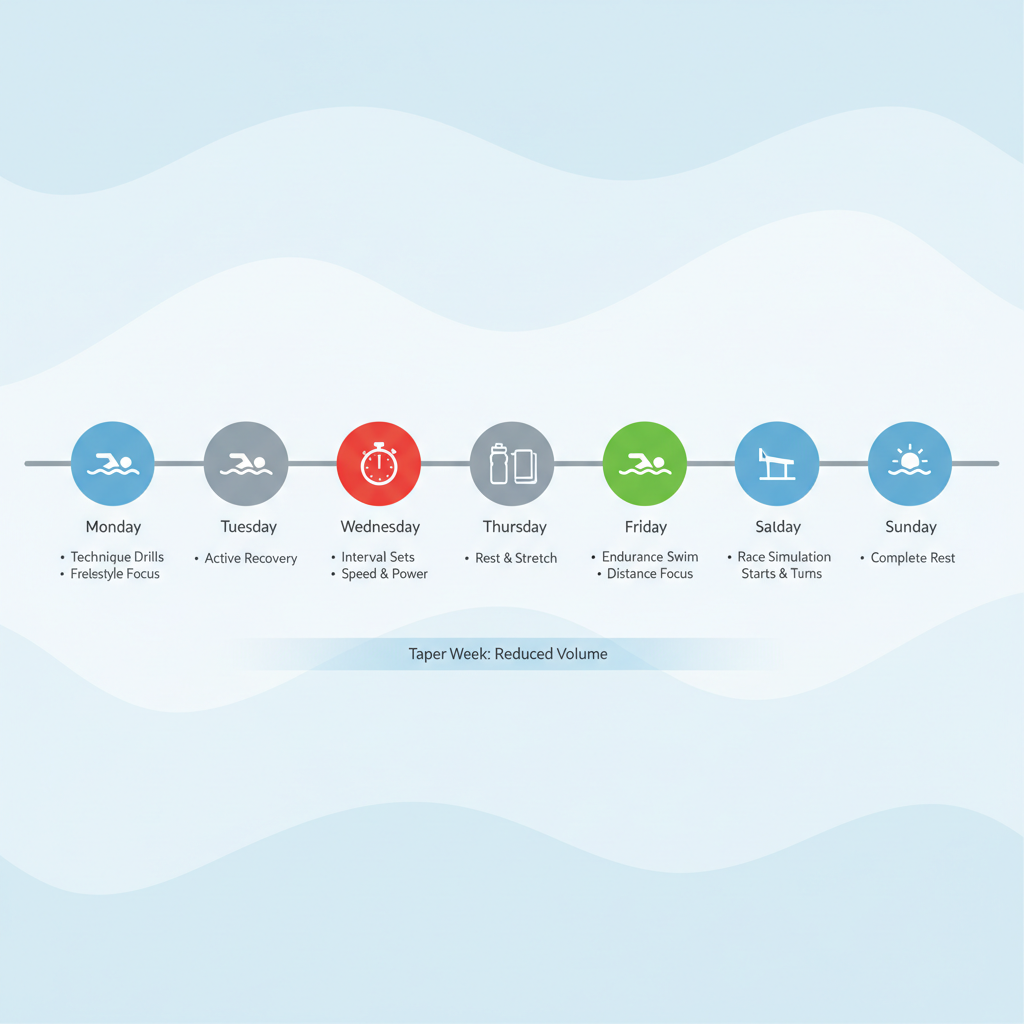
Weekly swim routine timeline for competitive athletes
Adapt these weekly swim regimens for youth athletes by shortening sessions and prioritizing fun drills over high volume. Always consult a coach to tailor plans, emphasizing recovery days for optimal results and long-term enjoyment in the pool.
Elevate Your Swimming with Proven Workouts
Incorporating structured Swim Workouts into your routine can revolutionize your performance, from beginner freestyle swim workouts at home to advanced swim workout plans for endurance. These effective training strategies build consistency, essential for technique refinement and speed gains, as supported by research from PMC on long-term swim training benefits.
Whether you’re a novice seeking basic drills or a competitive swimmer pushing limits, performance-enhancing routines like those ranked in MySwimPro’s freestyle insights address all levels. Tie these to your goals by progressing gradually, ensuring sustained improvements in stroke efficiency and overall fitness.
Ready to dive in? Start with our stroke efficiency packages today and commit to ongoing training for lasting results that elevate your swimming journey.